Omegle Proved the Market: 28 Million Users and What They Were Actually Looking For.
Omegle proved the market even as the platform itself was a disaster. The need it served was completely real.
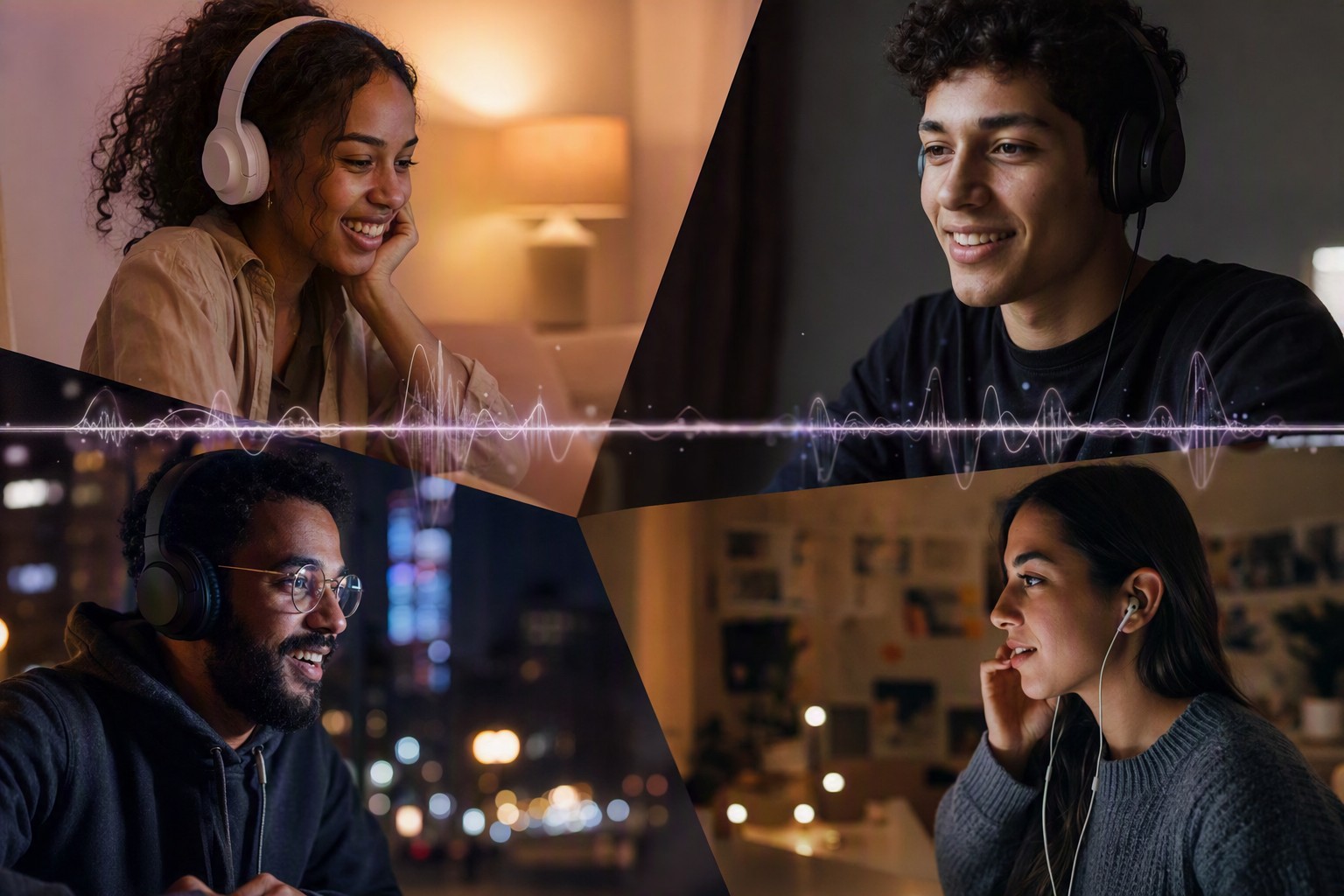
In November 2023, Leif K-Brooks shut down Omegle. He had built it in 2009 when he was 18, a website where two strangers got matched for a random video or text chat. No accounts, no profiles, no record of the conversation. Just two people.
At its peak, 28 million people used it every month.
Then it got shut down. Not because the idea failed. Because the execution attracted every bad actor imaginable, predators, bots, people who treated anonymity as a license for the worst version of themselves. The founder cited the psychological toll of running it. He was done.
The obituaries mostly focused on the chaos. What they missed was the 28 million.
Why did 28 million people want to talk to strangers?
The easy answer is boredom, or teenagers, or COVID. All of that is partly true.
But it doesn't explain why people kept going back. Why they'd sit through dozens of awful matches for the occasional conversation that felt like something. Why, when Omegle shut down, forums filled with people who weren't relieved, they were genuinely sad.
The harder answer is that something real was happening in those conversations. Something people couldn't get elsewhere.
Part of that answer is visible in any big city. People live technically surrounded by others and still feel like they can't say the real thing to anyone. Every existing relationship carries weight, history, consequences, expectations. Friends know you in ways that make honesty complicated. For a lot of people, there is no one they can just talk to without it meaning something.
The stranger effect
There's a counterintuitive thing about talking to someone you don't know. It's often easier than talking to someone you do.
Research on this goes back decades. People disclose more to strangers on trains than to close friends. They tell their whole life stories to bartenders they'll never see again. The phenomenon even has a name, the "stranger on the train" effect.
The reason is simple: a stranger carries no history and has no future with you. You can say the thing and then it's just gone. There's no relationship to protect, no permanent record to manage. Which is, paradoxically, often exactly what it takes to actually say the thing.
Omegle accidentally built infrastructure for this. The problem was everything around it, the video, the zero-friction access, the total lack of any filter. The result was predictable.
What the users were actually looking for
The obvious assumption about anonymous conversation apps is that they attract visibly lonely people. Isolated. Struggling. The obvious edge cases.
That assumption turns out to be wrong.
The people drawn most strongly to this kind of conversation usually aren't the obviously lonely ones. They have jobs, partners, full social calendars. They have dinner plans. By any external measure, they're doing fine. What they don't have is someone they can actually be honest with.
Many of them are outwardly connected in every way that counts: a partner, kids, close friends they've known for years. And still there's no one they can say the real thing to, because with the people who matter, saying it out loud would change something.
That's what most of the 28 million Omegle users were looking for. Some came for entertainment, some to debate with strangers online. But the conversations people missed when it shut down were the other kind: a place to say the real thing to someone who wouldn't remember it tomorrow.
Why voice changes everything
Omegle used video and text. Both are performative. On video you're aware of your face. In text you have time to edit, craft, control.
Voice is different. When you hear someone's pauses, their tone, the way they search for a word, you can't hide. And neither can they. There's no camera, no mirror, nothing to perform for. You're just there, and so are they.
That's why Mindfuse is voice only. Not as a limitation, as the whole point.
The market Omegle left
28 million monthly users is not a niche. It's proof of a massive, underserved human need, the need to talk to someone outside your existing social graph, without consequences, without performance.
Omegle failed because it built the infrastructure without the guardrails. Anyone could do anything. The result was predictable. And most of the apps like Omegle that rushed in after the shutdown copied the format, video roulette, and inherited the same problems.
But the need didn't disappear when Omegle shut down. It's still there. It's been there since people started telling their life stories to strangers on trains. The tools to build something for it that doesn't get shut down, with the guardrails Omegle never had, finally exist.
The version of Omegle worth using.
Voice only. Anonymous. Two weeks free, no card. Then 3 free conversations every week, or upgrade in the app for unlimited.