What the film says, slowly
The ship belonged to Theseus, the hero who sailed home to Athens after facing the Minotaur. The Athenians kept it for centuries as a monument. Wood rots, so whenever a plank gave out, a new one went in. Plutarch, writing around the year 100, says the ship became a standing example among philosophers: some held it was still the same ship, others that it was not. Nobody had moved it, nobody had renamed it, and yet at some point not a single original piece was left.
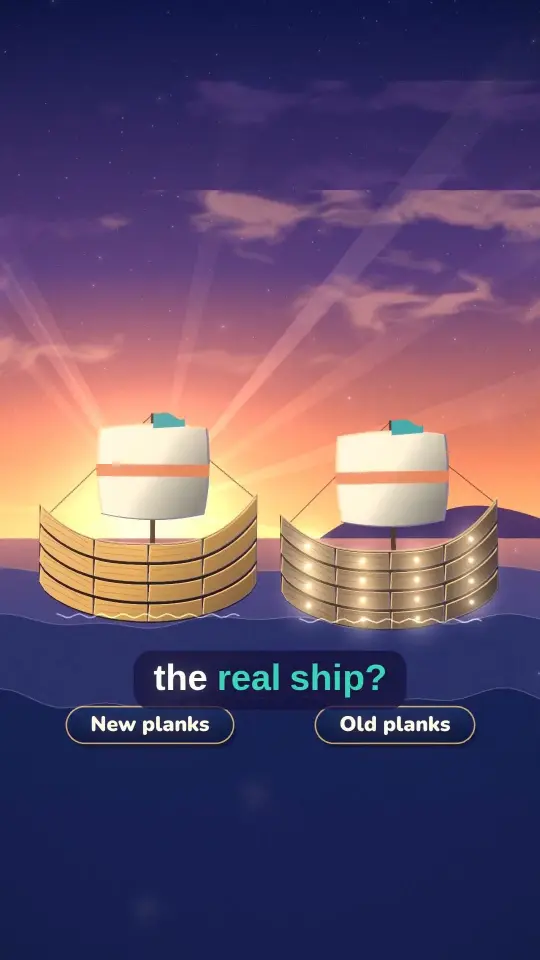
Centuries later, the English philosopher Thomas Hobbes made the puzzle sharper. Suppose someone had collected every old plank as it was removed and, years later, built a second ship from them. Now there are two ships. One has been on display the whole time and shares nothing with the original but its shape. The other is made of the original wood but was built last week. Which one is the ship of Theseus? Whatever you answer, you have to give up something you believed about what makes a thing itself.
The film ends by turning the question on you. A red blood cell lives about four months, then it is broken down and replaced by a new one. The blood carrying oxygen through you right now is not the blood you had in the summer. Other cells are replaced at their own pace, and a few, like most of the neurons in your brain, stay with you for life. You are a ship of replaced planks that still answers to the same name.
There are a few honest ways out. You can say that being the same thing is about the pattern, not the material: the plan of the ship, the shape of your life. You can say it is about the unbroken story: the ship was never two ships at once, and you have been one continuous person from your first breath. Or you can say that "the same" was never a fact about ships or bodies at all, only a word we use for things we have decided to keep calling by one name. Each answer sounds right until the other person in the conversation finds the case where it fails. That is why this one is better talked about than read about.
So are you still the same you?