Voice call with strangers
Voice call with strangers: a real call, no number shared.
A voice call with strangers is a live, one-to-one call with someone you have never met, anywhere in the world. No numbers, no profiles, just two voices. Often a stranger is the easiest person there is to call.
One free conversation a month, no card needed. 2 weeks of unlimited free, then €4/month.
People in 80+ countries
Busiest time: the Daily Fuse, every night at 9 PM ET, when everyone comes online together.
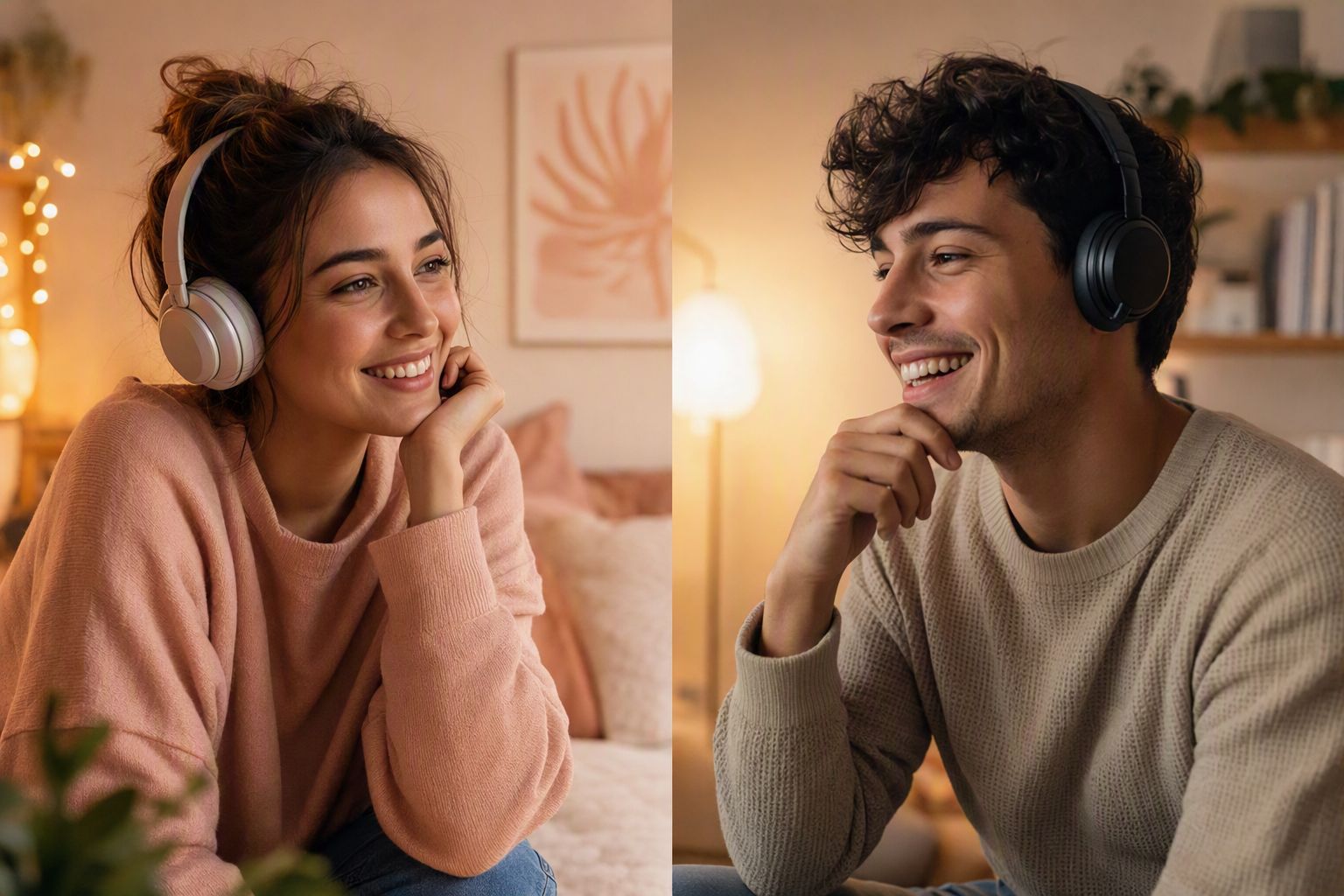
Why a stranger is the easiest person to call
The people closest to you are sometimes the hardest to be honest with, because they already have a picture of who you are. A stranger has no picture. There is no history to manage and no consequences afterward, so people often say the thing they have been carrying out loud for the first time. That is the strange gift of calling someone you will never meet again.
Anonymous, and number-free
You never exchange phone numbers. You are matched, you talk, and when the call ends nothing is stored about who you spoke to. Mindfuse uses a number only to verify you are a real person, never shown to anyone, which is what keeps the matches genuine instead of full of bots.
Voice chat with strangers, by call not text
Some people search for a voice chat with strangers, others for a voice call, and on Mindfuse they are the same thing: a live, spoken conversation with a real person. There is no text box and no typing. If what you wanted was to voice chat with strangers, this is that, in the form of a real call instead of messages.
Anywhere, any hour
Matching is global, so when it is the middle of the night where you are it is daytime somewhere else. There is almost always someone awake and up for a real conversation.
It is one tap inside Mindfuse, the app built for random voice chat and calls. One free call a month, then €4/month.
Talk to strangers by voice call, how it works
The whole point is that there is almost nothing to it. No profile to build, no bio to write, no photos to choose. From opening the app to hearing a real voice takes under a minute. Here is the full sequence.
- 01
Download Mindfuse and verify once
You verify with a phone number a single time, only to prove you are a real person. It is never shown to anyone you talk to, and it is the reason the matches are humans instead of bots. There is no profile, no photo, and no username to invent.
- 02
Tap to be matched
One tap and Mindfuse pairs you one-to-one with another person somewhere in the world who also wants to talk right now. Matching is random and global, you do not browse or choose, which is exactly what makes it feel like a real encounter rather than shopping for people.
- 03
Talk, actually talk
The call is live, voice only. No video to perform for, no text to compose. You hear tone, pauses, laughter. Most calls find their footing within a minute or two, usually after the mutual "so, where are you calling from?"
- 04
End it whenever you want
Either person can end the call in one tap, no explanation owed. When it ends, nothing is stored about who you spoke to. No numbers were exchanged, so there is no way to be contacted afterwards.
- 05
Talk again, or not
Your first conversation each month is free. If you want unlimited calls, your first 2 weeks are free, then €4/month, a deliberately small fee that keeps out the throwaway accounts that ruined free platforms.
Is a voice call with a stranger safe?
No app can promise every stranger will be kind, and that is true of any voice chat with strangers. What a well-built one can do is make abuse hard, keep nothing it does not need, and put the exit in your hand. Here is how Mindfuse handles each of those.
You stay anonymous
No name, no photo, no profile. You verify with a phone number at sign-up only, it is never shown to the person you talk to. They hear your voice, nothing else.
Nothing is recorded
Calls are not recorded or stored, and nothing is kept about who you spoke to. When the call ends, it is gone.
Voice only, no video
There is no camera and no video option, nothing of you to screenshot, save, or expose.
End it in one tap
You can leave any conversation instantly, no explanation needed. You are never stuck.
Real moderation
Every user agrees to community guidelines, there is in-call reporting, and breaking the rules means suspension.
The €4 is the filter
The single biggest safety feature is the small subscription: it removes the bots and throwaway accounts that flooded the free platforms. You are talking to people who chose to be there.
What do people actually talk about?
Everything, is the honest answer. Some calls are light, what life looks like in another country, food, music, the small absurdities of the day. Others go straight to the thing the caller could not say to anyone who knows them: a job they want to quit, a relationship they are unsure about, grief that has nowhere to go. A stranger has no stake in your story, which is why people have always been more honest on trains, in taxis, and on late-night calls than at their own dinner tables.
There is no script and no topic prompt. The only shared starting point is that both of you tapped the same button because you wanted a real conversation. That alone filters for the right kind of person, and it is why so many calls that start with small talk end somewhere unexpectedly real.
Can I voice call strangers anonymously?
Yes. You never share a number, no profile is shown, and nothing is kept about who you spoke to once the call ends.
Is it safe to call random strangers?
It is voice-only and moderated, so there is nothing of you to expose and you can end any call in one tap. The paid layer also filters out most bots and bad actors.
Do I need their number or mine?
Neither. Matching is anonymous and number-free. Mindfuse only uses a number to confirm you are real, and it is never shown to anyone.
Is a voice call with strangers free?
Your first conversation each month is free, no card needed. Want unlimited calls? Your first 2 weeks are free, then €4/month. The small fee is deliberate: it keeps out the bots and throwaway accounts that made free platforms unusable.
Can I choose who I am matched with?
No, and that is by design. Matching is random and global. You do not browse profiles or filter people, which is what makes the call feel like a genuine encounter instead of a selection process.
What if the call is awkward or I do not like the person?
End it. Either person can leave any call in one tap, no explanation owed, and you can simply match again. Research on stranger conversation consistently finds people expect far more awkwardness than actually happens.
Why voice instead of video?
Video makes you manage how you look while you talk, it turns a conversation into a performance. Voice keeps everything that matters, tone, hesitation, warmth, and drops the pressure. It is also safer: there is nothing of you to screenshot or record.
Call a stranger, by voice.
Anonymous, number-free, globally matched. One free conversation a month, no card needed. 2 weeks of unlimited free, then €4/month.
Busiest time: the Daily Fuse, every night at 9 PM ET, when everyone comes online together.

Scan to get Mindfuse