Cross-cultural connection
Meet People from Different Countries
Most of the people you will ever speak to share your basic operating assumptions: roughly your sense of how families work, what success looks like, what is rude and what is normal. It is comfortable, and it is also a kind of confinement. The specific value of meeting someone from a different country is that you encounter a person whose defaults are simply not your defaults, and that is far more interesting than it sounds.
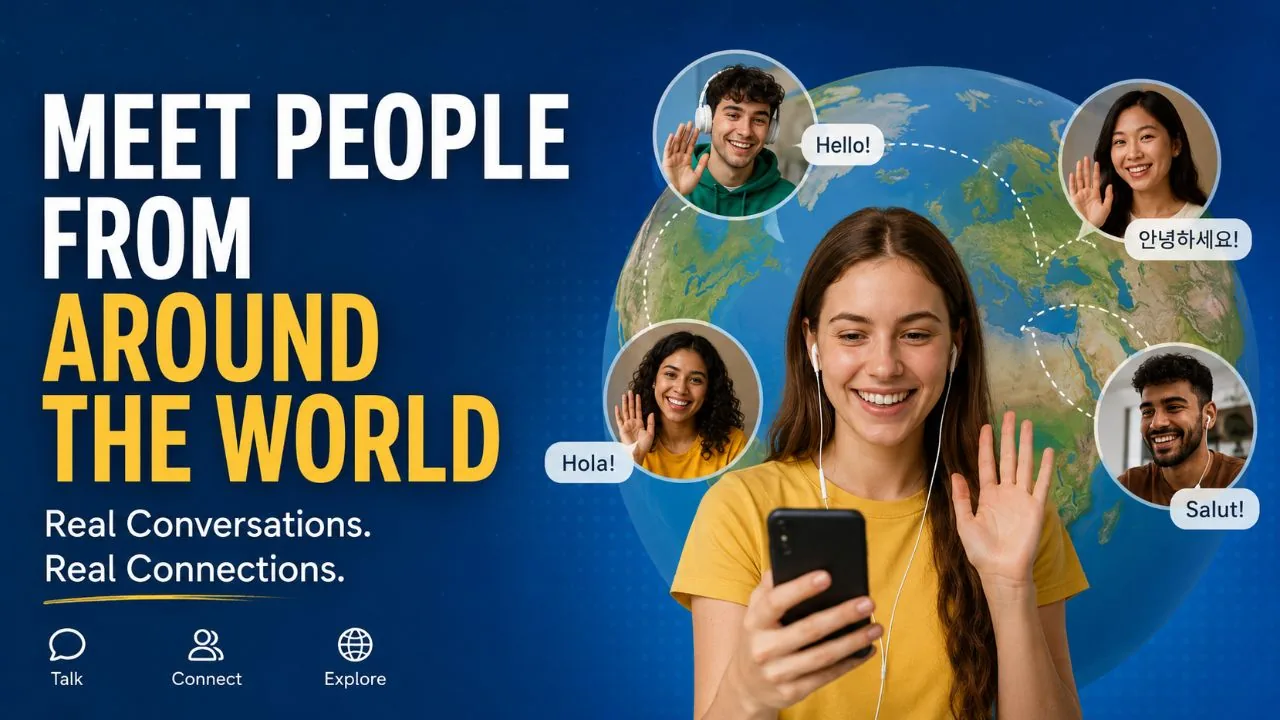
The value is in the friction of assumptions
Talk to someone who grew up where it is normal for three generations to share a home, or where leaving the city you were born in is unusual, or where the question of what you do for a living is considered slightly invasive. Suddenly your own arrangements stop feeling like the way things are and start feeling like one option among many. This is not a small thing. It is the difference between inheriting a worldview and choosing one, and you cannot do the second without first seeing that alternatives exist.
The friction is the point. It is the moment another person's casual answer makes you notice an assumption you did not know you were carrying.
And then the part that surprises everyone
People expect the differences. What they do not expect is how quickly, underneath them, you reach something held entirely in common, a worry about a parent getting older, an old ambition quietly abandoned, the same joke landing across a language barrier. Meeting people from different countries is the most efficient way to learn both halves of a single fact: that human experience is astonishingly varied on the surface, and astonishingly shared underneath. You cannot fully believe that until you have felt it in a live conversation.
How Mindfuse works
Mindfuse connects you with a stranger from another country by anonymous voice, no profile, no video, no algorithm steering who you meet. Just two people talking. One free conversation a month. Every match is a random voice chat, which is exactly what makes the encounter feel real rather than curated.
Best ways to meet people from different countries
There is no single best way. The right choice depends on the kind of connection you want: some people want to practise a language, others want a real friendship, others just enjoy learning about a place through the person who lives there. The platforms worth your time are the ones that encourage genuine interaction instead of endless scrolling.
| Method | Best for | Main advantage | Main limitation |
|---|---|---|---|
| Voice conversations | Real conversations | Personal and spontaneous | Can feel awkward at first |
| Language exchange | Language practice | Learn naturally with speakers | Language ability can vary |
| Online communities | Shared interests | Easy conversation starters | May stay community-based |
| Gaming communities | Casual interaction | Shared activity removes pressure | Often focused on gaming |
| Travel communities | Travel and culture | Learn from local experiences | Less spontaneous |
| Pen pals | Slow friendships | More thoughtful conversations | Takes longer to build |
Voice conversations
Voice is one of the fastest ways to build a real connection with someone from another country. You hear their tone, humour, and hesitation in a way text cannot capture. There is no need to prepare a perfect introduction, just start with where you live, what you do, or what life is like where you are, and let it go wherever both people want.
Language exchange
Two people help each other practise languages while sharing stories about their cultures and daily lives. You pick up slang, humour, and expressions that never appear in textbooks. If speaking is your goal, our guide to the best language exchange apps explains how to choose one.
Online and travel communities
Communities built around a shared interest, photography, books, fitness, travel, give you something to talk about from the start, so you are not introducing yourself from scratch. Travellers in particular tend to share recommendations and local stories you would never find in a guidebook.
Why voice feels more personal than social media
Social media helps you discover people. Voice helps you understand them. Most platforms are built around photos and carefully chosen moments, so you see what people choose to share but rarely have a genuine conversation. Voice changes that completely: you hear laughter, hesitation, and emotion as they happen, and small details like tone and pauses make someone feel real instead of just another profile. Many people find it easier to build trust in one voice conversation than in weeks of messaging.
How to start a conversation with someone from another country
Start with simple questions about where they live and their everyday life. You do not need a perfect opening, a genuine question is enough. A few that work well:
- What is your everyday life like where you live?
- What do you usually do on weekends?
- What food is popular in your area?
- What is something foreigners often misunderstand about your country?
- What is one thing you really like about where you live?
Let it develop naturally rather than firing off questions one after another, and share something about yourself too, so it feels like a conversation and not an interview. If the idea makes you nervous, that is completely normal, most people find talking to someone new gets comfortable within the first few minutes.
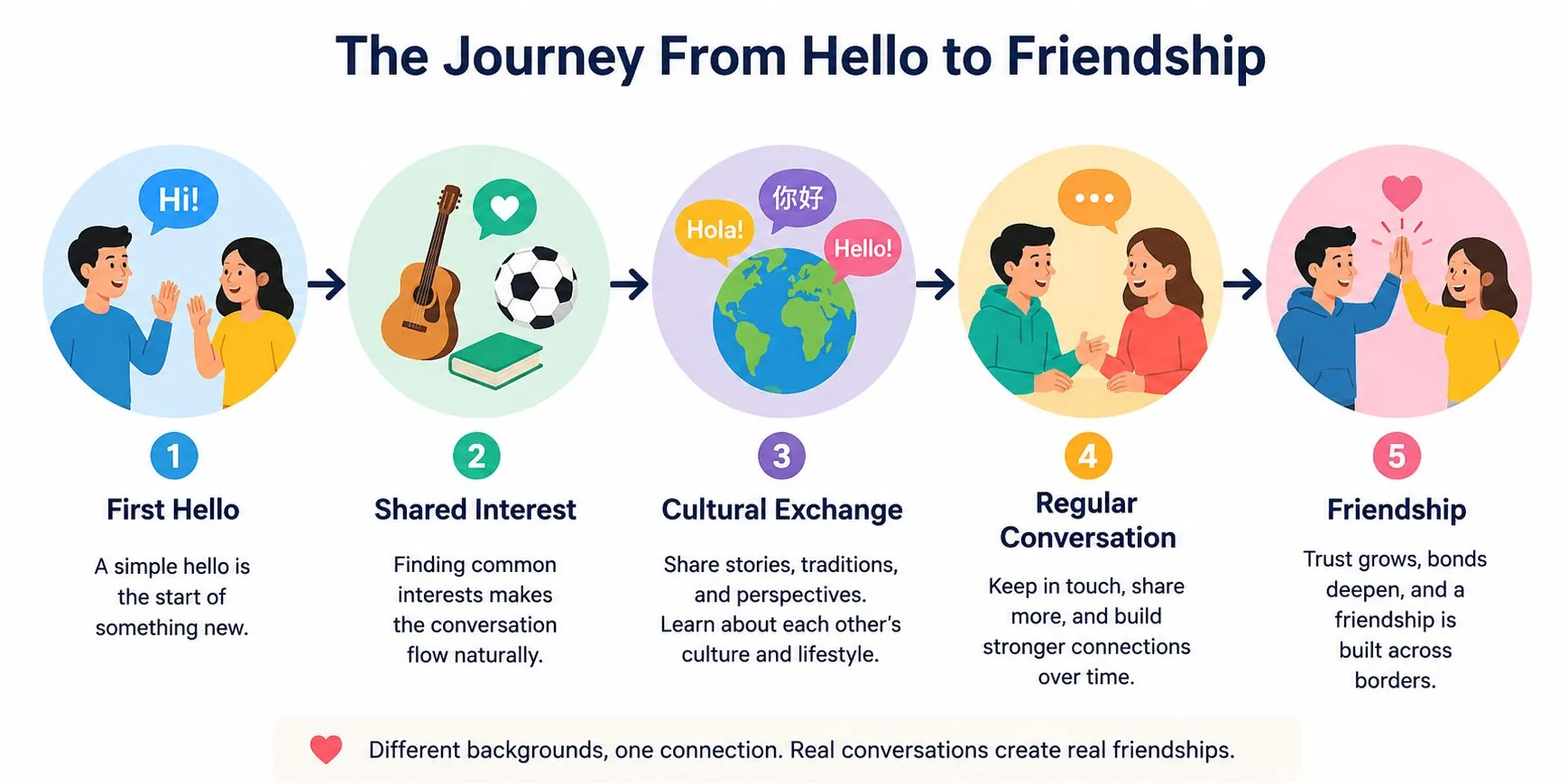
Staying safe when you meet people online
Most conversations are friendly and respectful, but a few simple habits let you enjoy the experience with confidence.
What to share
Start with everyday topics like hobbies, travel, food, and music. There is no need to share personal details in a first conversation, and never give out your home address, financial information, passwords, or anything that identifies you off the platform.
Stay anonymous
Platforms that allow anonymous conversations let you focus on the discussion instead of your identity. You can meet someone new without handing over your phone number or social profiles, which makes the whole thing more comfortable, especially the first time.
Recognise red flags
Trust your instincts and leave any conversation that feels off. Be cautious if someone quickly asks for money, personal information, or private photos, or pushes to move to another platform straight away.
Meet people from different parts of the world
You do not need to travel to have these conversations, and you do not need to decide where someone should be from before you start, sometimes not knowing who you will meet is the best part. But if you are curious about a particular country or region, these guides are a good starting point.
North America
Europe
Australia and Oceania
Conversations do what stereotypes cannot
Most opinions about other countries are formed without ever speaking to someone who lives there. A single real conversation tends to replace those assumptions with a person, and people turn out to be far more complex than the labels attached to their country or culture. Research consistently finds that meaningful conversations between people of different backgrounds reduce prejudice and build empathy, which is one of the most quietly valuable things about talking across borders. If the evidence interests you, we collected it in our polarization statistics.
Meet someone unlike anyone you know
Real strangers, anonymous voice. No performance, no profile, no algorithm.
One free conversation a month · €4/month · iOS and Android
Frequently asked questions
What is the best way to meet people from other countries?
It depends on what you want from the connection. Voice conversations, language exchange, online communities, and travel groups are all good ways to meet people from different countries. Voice is the fastest way to feel like you are actually talking to someone rather than reading their posts.
How can I make international friends online?
Start on a platform where people from different countries talk and interact naturally, then focus on genuine conversations around shared interests, culture, hobbies, or everyday life. Friendships grow from conversations both people choose to continue.
Can I meet people from other countries without travelling?
Yes. You can meet people from around the world through voice calls, language exchange platforms, online communities, and gaming groups. You can learn about another country without leaving home.
Is it safe to talk to people from other countries online?
It can be, when you use a platform with good privacy and safety features. Avoid sharing your address, financial details, or passwords, and leave any conversation that makes you uncomfortable.
Do I need to speak another language to make international friends?
No. Simple language, patience, and a willingness to learn are usually enough to start a meaningful conversation. Most people appreciate the effort far more than perfect grammar.
How do I start a conversation with someone from another country?
Start with an easy question about their everyday life: where they live, what they do on weekends, what food is popular there, or what a normal day looks like. A genuine question is usually enough to get things moving.
Can talking to people from other countries improve my language skills?
Yes. Real conversations help you pick up natural pronunciation, common phrases, slang, and everyday expressions that rarely appear in textbooks.
What should I talk about with someone from another country?
Daily life, food, travel, culture, traditions, hobbies, music, work, or language all work well. Shared interests make the conversation easier and often lead somewhere deeper.